
Understanding Furnace Efficiency and Its Impact on Your Energy Bills
As homeowners continue to feel the pinch of rising utility costs, maximizing furnace efficiency has never been more crucial. Your furnace is one of the biggest energy consumers in your home, especially during the colder months. But many homeowners don’t realize how much inefficiency can cost them—sometimes hundreds of dollars every year. Furnace efficiency is measured by a unit’s AFUE (Annual Fuel Utilization Efficiency), which indicates how much heat the system delivers per dollar spent on fuel. A modern high-efficiency furnace can reach up to 98% AFUE, while older systems often hover between 56% and 70%.
When your furnace operates inefficiently, not only does it require more fuel to produce the same amount of heat, but it also places more strain on the system, shortening its lifespan. Common signs of inefficiency include uneven heating, long run times, frequent cycling, and rising energy bills despite similar usage. By understanding how your furnace works and evaluating its current performance, you’re taking the first step toward reducing energy waste and cutting costs. Efficiency improvements can deliver both short-term savings and long-term value in the form of reduced wear-and-tear and a more comfortable home.
Smart Ways to Boost Furnace Efficiency Without Replacing the Unit
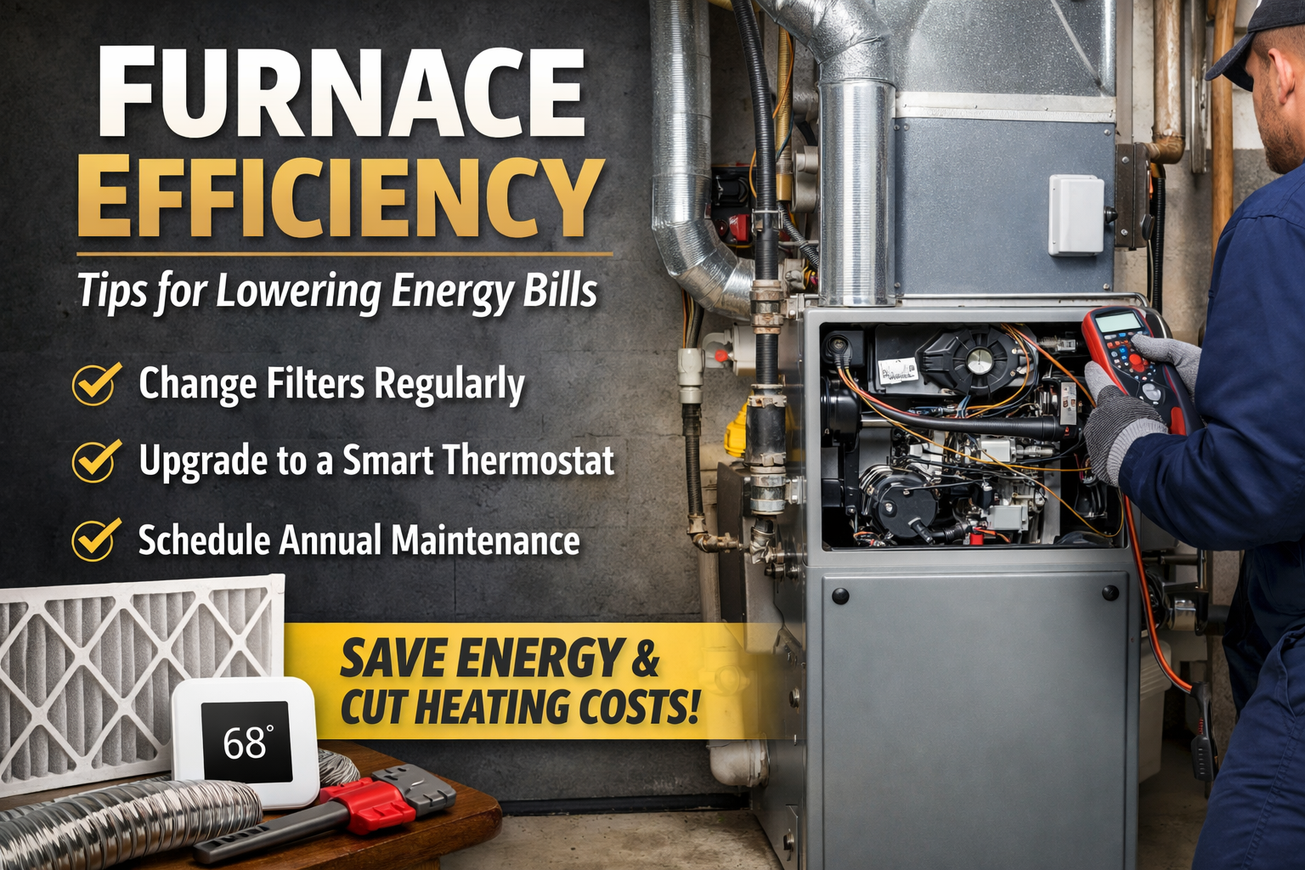
You don’t always need to install a new furnace to enjoy major efficiency gains. In fact, there are several affordable and proactive steps you can take to improve how your existing furnace runs. The most critical habit is changing your air filter regularly—ideally every 1–3 months depending on usage. A clogged filter restricts airflow, forcing your system to work harder and consume more energy. You should also keep the area around your furnace clear and free of dust or debris to support proper ventilation and safety.
Another key tip is to invest in a programmable or smart thermostat. These devices automatically adjust your home’s temperature based on time of day and occupancy, reducing unnecessary heating when you’re asleep or away. Even a few degrees of setback during off-hours can yield noticeable energy savings. Additionally, sealing air leaks in ductwork, windows, and doors can dramatically reduce the load on your heating system. Proper insulation—especially in attics, basements, and crawl spaces—helps retain warmth, reducing how often your furnace needs to cycle on.
Routine furnace maintenance by a licensed HVAC technician can also keep your system running like new. A thorough tune-up includes cleaning components, checking combustion efficiency, testing safety controls, and identifying worn parts before they become major issues. Most HVAC pros recommend annual service before winter begins to ensure optimal performance when you need it most.
When to Upgrade Your Furnace and What to Look for in 2026 Models
If your furnace is over 15–20 years old or showing signs of frequent breakdowns and inconsistent heating, it may be time to consider an upgrade. While the initial cost of a new system can be significant, a high-efficiency furnace can pay for itself over time through reduced energy consumption and fewer repair needs. In 2026, ENERGY STAR-certified furnaces with modulating burners, variable-speed blowers, and sealed combustion are leading the way in home comfort and cost efficiency.
Look for furnaces with an AFUE rating of 95% or higher, and ensure the unit is properly sized for your home. An oversized or undersized furnace can lead to comfort issues and energy waste. Also consider hybrid systems or pairing your furnace with a heat pump to optimize performance in mild winters. Many local utility companies and government programs also offer rebates, tax incentives, and financing for homeowners upgrading to energy-efficient HVAC systems.
Before replacing your furnace, consult with a trusted local HVAC company that can assess your home’s heating needs and recommend the right solution. They can also help you compare costs, efficiency ratings, and long-term ROI, ensuring you make an informed decision that benefits your home and your wallet. With the right furnace upgrade and smart energy habits, you can enjoy reliable warmth all winter—without breaking the bank.