

Energy-Efficient HVAC Systems: Saving Money and the Environment
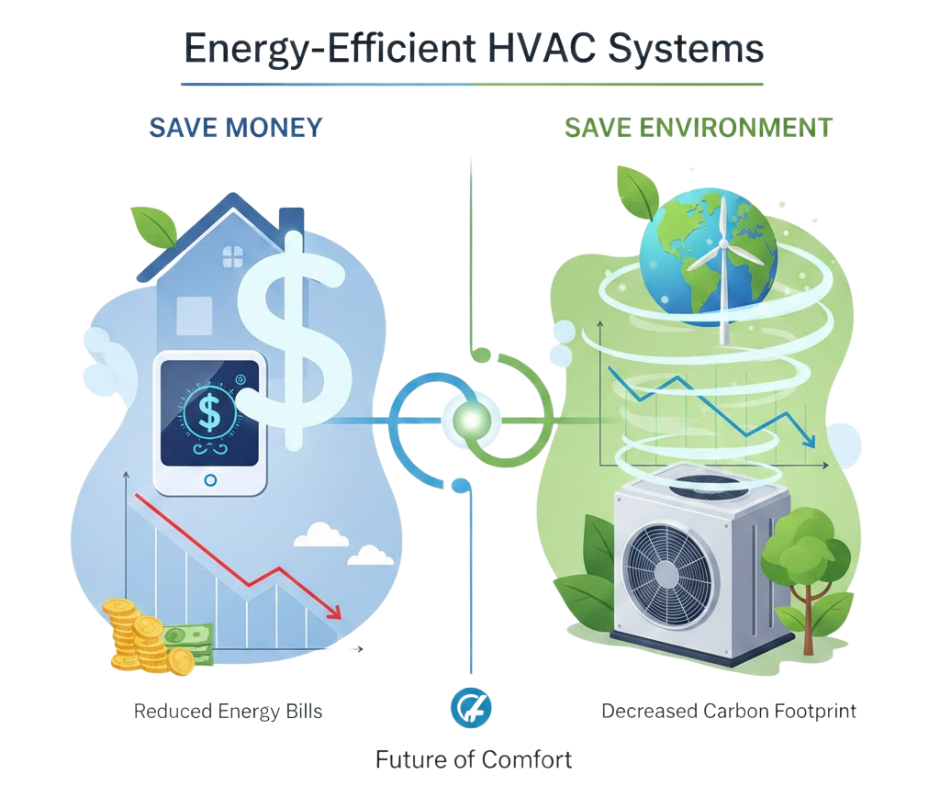
💸 Smart Climate Control: How Energy-Efficient HVAC Slashes Your Bills
In an era of rising energy costs and growing environmental consciousness, the performance of your heating, ventilation, and air conditioning (HVAC) system has never been more critical. The single largest consumer of energy in most American homes, traditional HVAC units often operate inefficiently, leading to inflated utility bills and a significant carbon footprint. Fortunately, the latest generation of energy-efficient HVAC systems offers a powerful solution, allowing homeowners and businesses to achieve optimal indoor comfort while drastically reducing operational expenses. The core of this efficiency lies in several technological advancements that move beyond the simple on/off cycling of older units.
High-efficiency systems, particularly those with a high Seasonal Energy Efficiency Ratio (SEER) for cooling and an Annual Fuel Utilization Efficiency (AFUE) for heating, are designed to consume less power to deliver the same, or even superior, level of performance. Key technologies driving these savings include variable-speed compressors and blowers.
Unlike single-stage compressors that always run at full capacity, variable-speed units can operate at different speeds, precisely matching the current cooling or heating demand. This ability to run longer at lower, quieter settings means they maintain a more consistent temperature, eliminating the energy-wasting temperature swings common with older systems, which must work harder to catch up after an 'off' cycle. Furthermore, advanced thermostats, such as smart and programmable models, play a crucial role by learning your habits and adjusting temperatures automatically, ensuring the system only runs when necessary.
The initial investment in an energy-efficient system, such as a heat pump or a high-SEER central air conditioner, might be higher, but the long-term financial benefits are substantial. Homeowners routinely see a reduction in their annual energy bills of 20% to 50%, making the transition not just an environmental choice but a savvy financial one that offers a rapid return on investment (ROI).
🌿A Breath of Fresh Air: The Environmental Benefits of High-Efficiency HVAC
The transition to energy-efficient HVAC technology is a significant step toward a sustainable future, directly addressing the urgent challenge of climate change. The environmental impact of older, inefficient systems is substantial, primarily due to their reliance on fossil fuels for heating and their high consumption of electricity, which is often generated by burning coal or natural gas. By reducing energy use, high-efficiency units lead to a direct, proportional decrease in the emission of greenhouse gases, including carbon dioxide ($CO_2$), sulfur dioxide ($SO_2$), and nitrogen oxides ($NO_x$). For example, switching from a low-efficiency furnace to a modern, ENERGY STAR® certified model can prevent thousands of pounds of $CO_2$ from entering the atmosphere over the unit's lifetime. Beyond mere energy consumption, the environmental profile of these systems is also improved by changes in the refrigerants they use.
Older air conditioners and heat pumps often relied on hydrochlorofluorocarbons (HCFCs), such as R-22, which have a high Ozone Depletion Potential (ODP). Modern, efficient systems now utilize refrigerants like R-410A and increasingly hydrofluoroolefins (HFOs) and natural refrigerants, which have a significantly lower or near-zero ODP and Global Warming Potential (GWP).
A particularly impactful technology in this environmental shift is the modern heat pump. Operating on the principle of transferring heat rather than generating it, a heat pump is incredibly efficient, especially when paired with renewable energy sources like solar panels. When powered by clean electricity, a heat pump offers a path toward zero-emission heating and cooling, a major goal for global decarbonization efforts. This holistic approach—combining reduced energy consumption, climate-friendly refrigerants, and the promotion of electric heat pumps—makes energy-efficient HVAC a cornerstone of sustainable building and a crucial tool in the fight for a healthier planet.
💡Choosing and Maintaining Your Energy-Efficient HVAC for Peak Performance
Making the decision to upgrade is only the first step; maximizing the financial and environmental benefits requires choosing the right system and ensuring its longevity through proper maintenance. When selecting a new system, key metrics like SEER2 (Seasonal Energy Efficiency Ratio 2) for cooling and HSPF2 (Heating Seasonal Performance Factor 2) for heat pumps are paramount. The higher the rating, the more efficient the unit. A minimum SEER2 rating of 13.4 is generally recommended, but systems with ratings of 16 or higher offer the best long-term savings. For furnaces, look for an AFUE rating of 90% or greater, as this indicates that 90 cents of every dollar spent on fuel is converted directly into usable heat.
Consulting with a certified HVAC professional is essential to properly size the unit for your home, as an improperly sized system—too large or too small—will negate any efficiency gains. Beyond choosing the right unit, routine, professional HVAC maintenance is the secret weapon for maintaining peak energy efficiency. An annual tune-up by a technician ensures all components, from the coils and filters to the electrical connections and refrigerant levels, are working optimally.
A dirty or improperly charged system can lose 5% to 20% of its efficiency, costing you money and forcing the unit to work harder. Homeowners can contribute by regularly replacing or cleaning air filters—a simple step that dramatically improves airflow and efficiency. Furthermore, sealing and insulating ductwork can prevent significant energy losses; in many homes, up to 30% of conditioned air is lost through leaks in the ducts. Utilizing zoning systems is another effective strategy, allowing you to separately control the temperature in different areas of your home, so you only condition the spaces you are currently using. By combining careful system selection, professional annual maintenance, and simple homeowner tasks like filter changes, you ensure your energy-efficient HVAC system delivers maximum comfort, maximum savings, and minimum environmental impact for years to come.